Canada has introduced an important change that may help temporary foreign workers avoid losing their legal work status while waiting for their employer’s Labour Market Impact Assessment (LMIA).
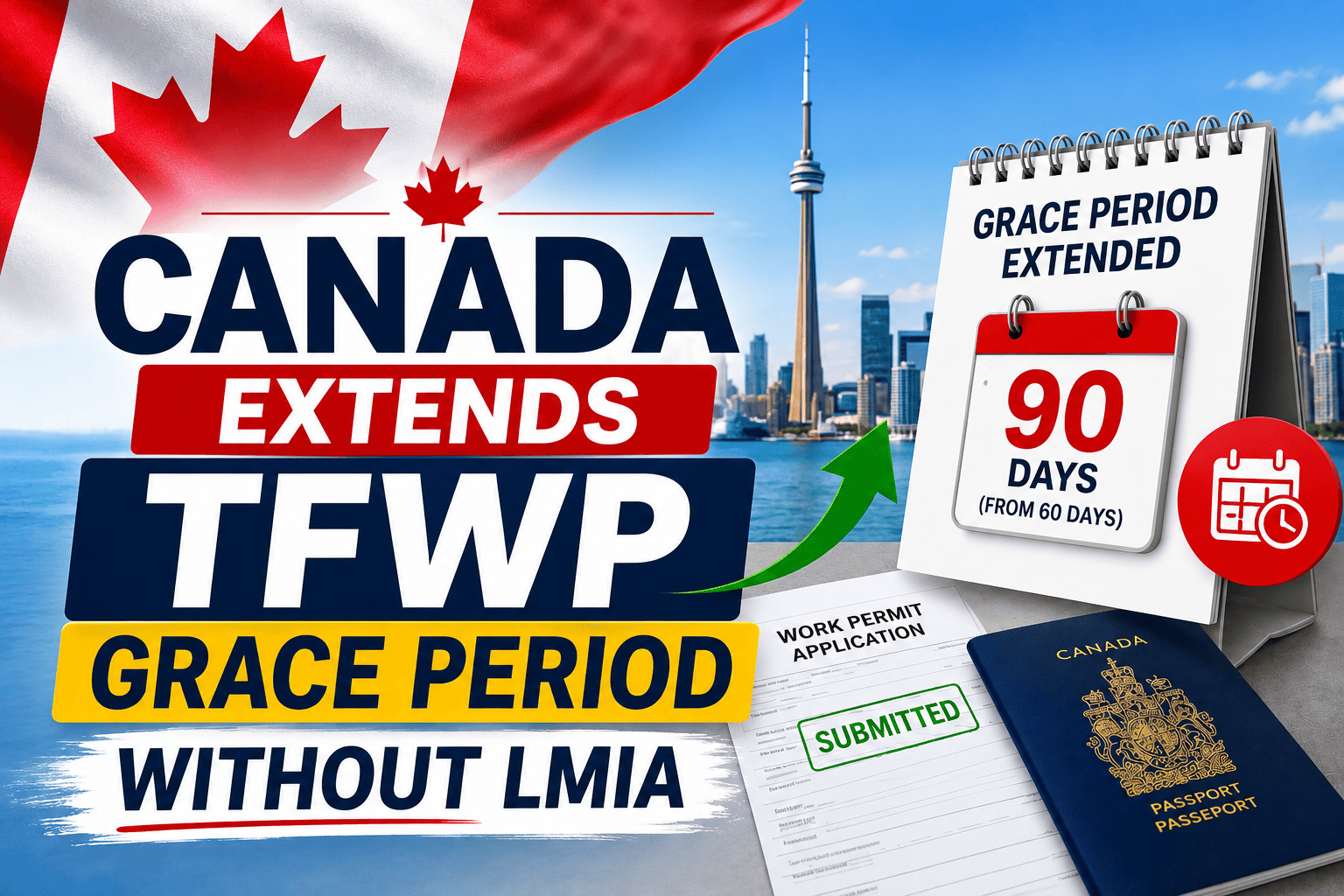
As of August 21, 2026, Immigration, Refugees and Citizenship Canada (IRCC) has extended the grace period for certain in-Canada Temporary Foreign Worker Program (TFWP) work permit applications from 60 days to 90 days. This gives eligible applicants an additional 30 days to submit proof of a positive or neutral LMIA.
For foreign workers whose permits are close to expiry, this change can provide valuable extra time and reduce the risk of having to stop working while their employer’s LMIA application is being processed.
What Is Concurrent Processing?
Normally, a foreign worker applying for a TFWP work permit needs to have the employer’s positive or neutral LMIA before submitting the work permit application.
However, concurrent processing allows eligible foreign nationals already in Canada to submit their work permit application while their employer’s LMIA application is still being processed.
Under the updated policy, applicants can now have up to 90 days to provide evidence that the LMIA has received a positive or neutral decision.
This is particularly helpful because LMIA processing can take several months. Without concurrent processing, workers could face a gap between the expiry of their current work permit and the employer receiving the required LMIA.
Who Can Qualify for Concurrent Processing?
To be considered for concurrent processing, several conditions must generally be met:
- The applicant’s current work permit will expire in two weeks or less.
- The employer has already submitted a complete LMIA application.
- A decision on the LMIA application has not yet been made.
- The LMIA application was submitted early enough that a decision could reasonably have been expected before the worker’s permit expired.
If these requirements are met, the applicant may submit the TFWP work permit application before receiving the final LMIA decision.
How Does the 90-Day Period Work?
When an application qualifies for concurrent processing, the immigration officer places the work permit application on hold for up to 90 days.
During this period, the applicant has time to provide proof of the employer’s positive or neutral LMIA. Once the 90-day period ends, the officer can continue processing the work permit application and make a final decision.
The extension from 60 to 90 days gives workers more breathing room when LMIA processing takes longer than expected.
Why Is This Change Important?
Maintaining legal work status is extremely important for temporary foreign workers in Canada. When an eligible worker applies to extend their work permit before the current permit expires, they may benefit from maintained status and, in certain circumstances, continue working under the conditions of their existing permit while waiting for a decision.
However, immigration applications can be complex, and eligibility depends on individual circumstances.
If you are unsure about your TFWP work permit options, speaking with the best immigration consultant in Edmonton can help you understand the requirements and avoid costly mistakes.
A reliable top immigration company in Edmonton can also review your situation, explain the concurrent processing process, and help ensure that the required documents are submitted correctly and on time.