

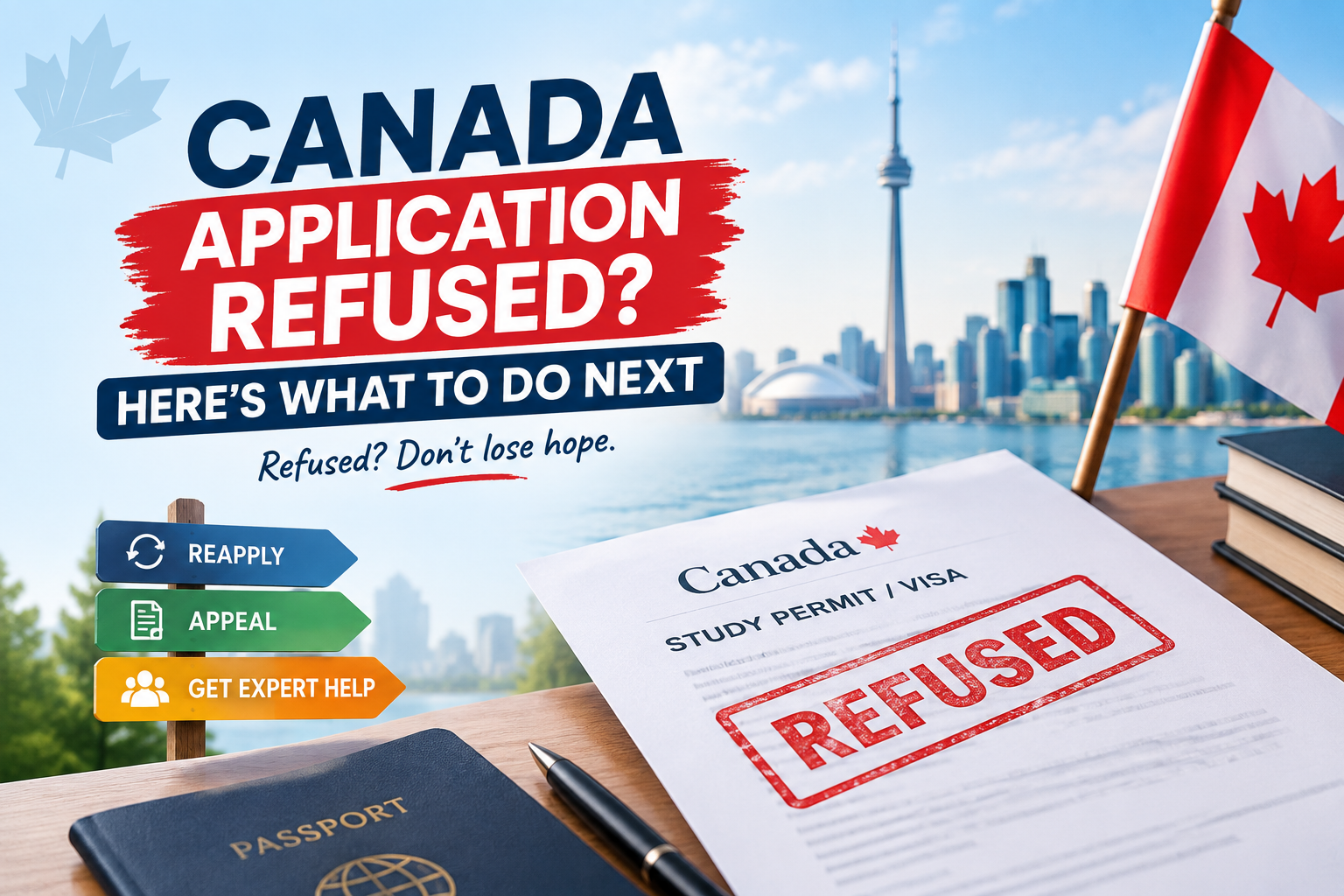
Receiving a Canada visa including study permit, work permit, or permanent residence refusal can be incredibly disappointing. After spending weeks preparing documents, arranging finances, and planning your future, a refusal can make you feel like your Canada dream has come to an end.
But a refusal does not always mean your immigration journey is over.
In many situations, there may still be options available. The aim is to understand why your application was refused, what went wrong, and what can be done differently.
Understand the Causes
A refusal can happen for several reasons. Sometimes the issue is related to documentation. In other cases, the application may not have clearly demonstrated that the applicant met the requirements.
Common reasons may include:
- Missing or incomplete documents
- Insufficient financial evidence
- Weak explanation of the applicant’s circumstances
- Inconsistent information in the application
- Concerns regarding eligibility
- Failure to adequately address the visa officer’s concerns
- Choosing an immigration pathway that does not properly match the applicant’s profile
The important thing is not to submit the same application again without understanding the previous refusal.
A stronger approach starts with identifying the actual problem.
Start by Understanding Your Refusal
You must carefully review the refusal letter and the reasons provided by the immigration authorities before submitting another Canada visa application.
You must explore:
l What concern led to the refusal?
l Was the required evidence properly provided?
l Did the application clearly explain my circumstances?
l Does my chosen immigration pathway still make sense for my profile?
Don’t Let One Refusal Define Your Canada Plan
Most applicants submit another Canada visa application immediately after a refusal without addressing the underlying concerns.
A new application should not simply be a copy of the previous one with a few documents added.
Instead, the entire case should be reviewed carefully. The aim is to understand the previous drawbacks and understand what additional evidence, explanation, or strategy may be suitable.
Every applicant has a different background, including their education, work experience, finances, travel history, family circumstances, and immigration goals.
What to Do After a Canada Visa Refusal?
1. Carefully Review the Refusal
Start by understanding exactly why the Canada visa application was refused. Don’t focus only on the word “refused”—look closely at the concerns mentioned in the decision.
2. Find Out the Weak Points
Understand whether there were gaps in eligibility, financial evidence, documentation, explanations, or other aspects of the application.
3. Revise Your Immigration Strategy
Depending on your circumstances, you may need to reconsider your application approach or explore whether another immigration pathway is more suitable.
4. Arrange Strong Evidence
If you apply again, your supporting documents should directly address the concerns raised previously and accurately reflect your current circumstances.
5. Contact a Professional for Guidance
Immigration matters can be complex, especially after a Canada visa refusal. You can get help from an experienced immigration professional to review your case. This can help you understand your available options before making your next move.
Don’t Let Your Refusal May Be the Final Chapter
A Canada visa refusal can feel like a major setback, but it doesn’t necessarily mean that your plans for Canada have to stop.
What matters now is what you do next.
Instead of rushing into another application, take the time to understand the refusal, review your circumstances, and determine what needs to be improved.
Imperial Immigration is the best immigration consultant in Edmonton. We understand that every applicant’s situation is different. Our approach is focused on understanding your immigration history, reviewing the concerns behind the refusal, and helping you determine a suitable way forward based on your individual circumstances.
Did You Receive a Canada Visa Refusal?
Don’t make your next move without understanding your options.
Talk to Imperial Immigration today and get your case reviewed to understand the possible next steps for your Canada immigration journey.


